


U5-U6
ACTIVE START.
Active Start (Ages 4-6) is about mastering basic human movement and developing habits of physical activity
Focus is placed on developing:
Children in this age range should be active for at least 3 hours a day.
Adult Led - 25%
Child Led - 75%

U7-U9
FUNDAMENTALS
Is about developing fundamental movement skills & enjoying being physically active; to develop fundamental movement while participating & having fun.
Focus is placed on developing:
Instruction - 15%
Adult Led - 35%
Opportunity for Free Play - 50%
U10-U13
LEARN TO TRAIN
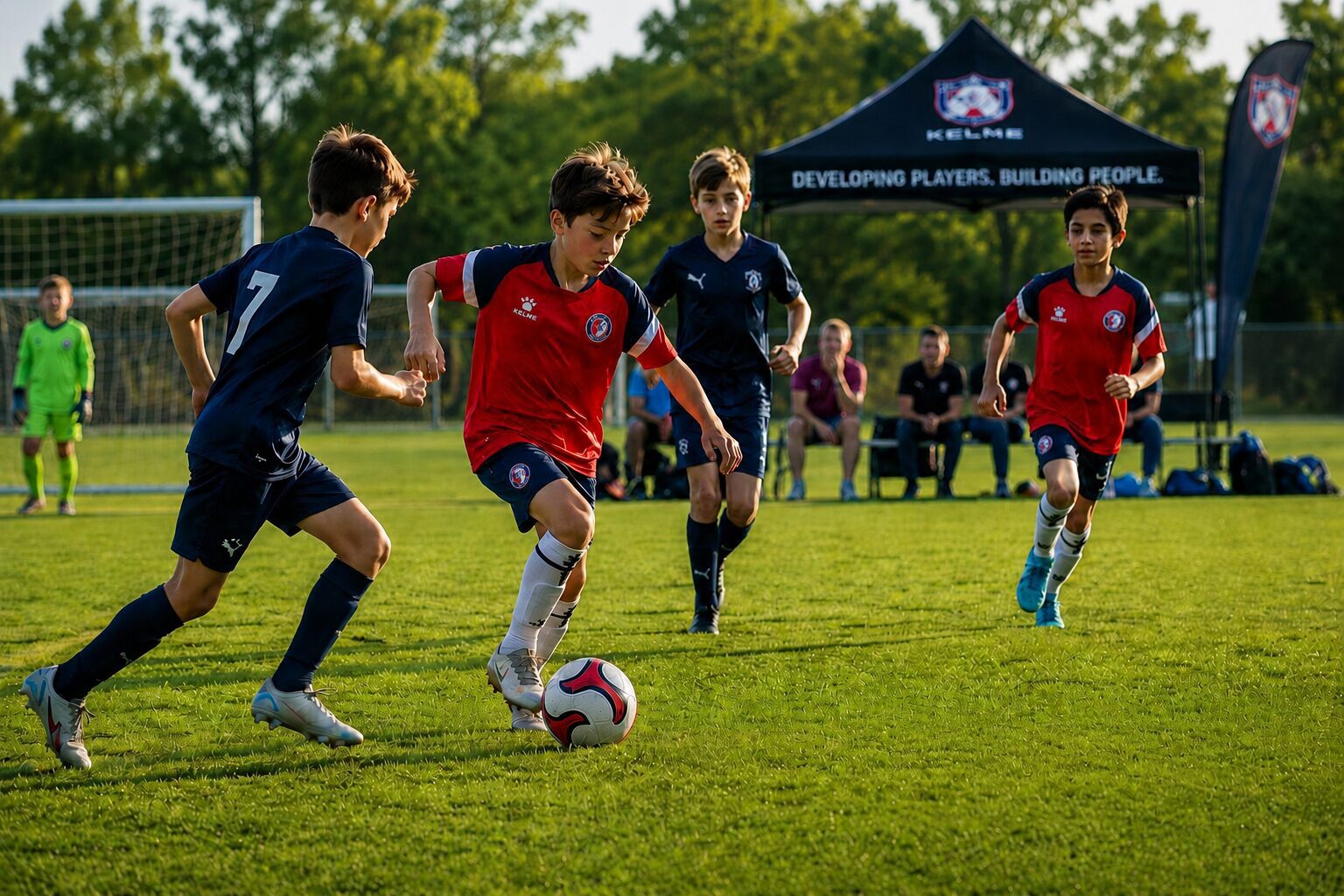
Is about learning a wide range of fundamental sport skills.
Focus is placed on:
Competition - 30%
Training - 70%
Alignment to Provincial, Territorial, and National Pathway
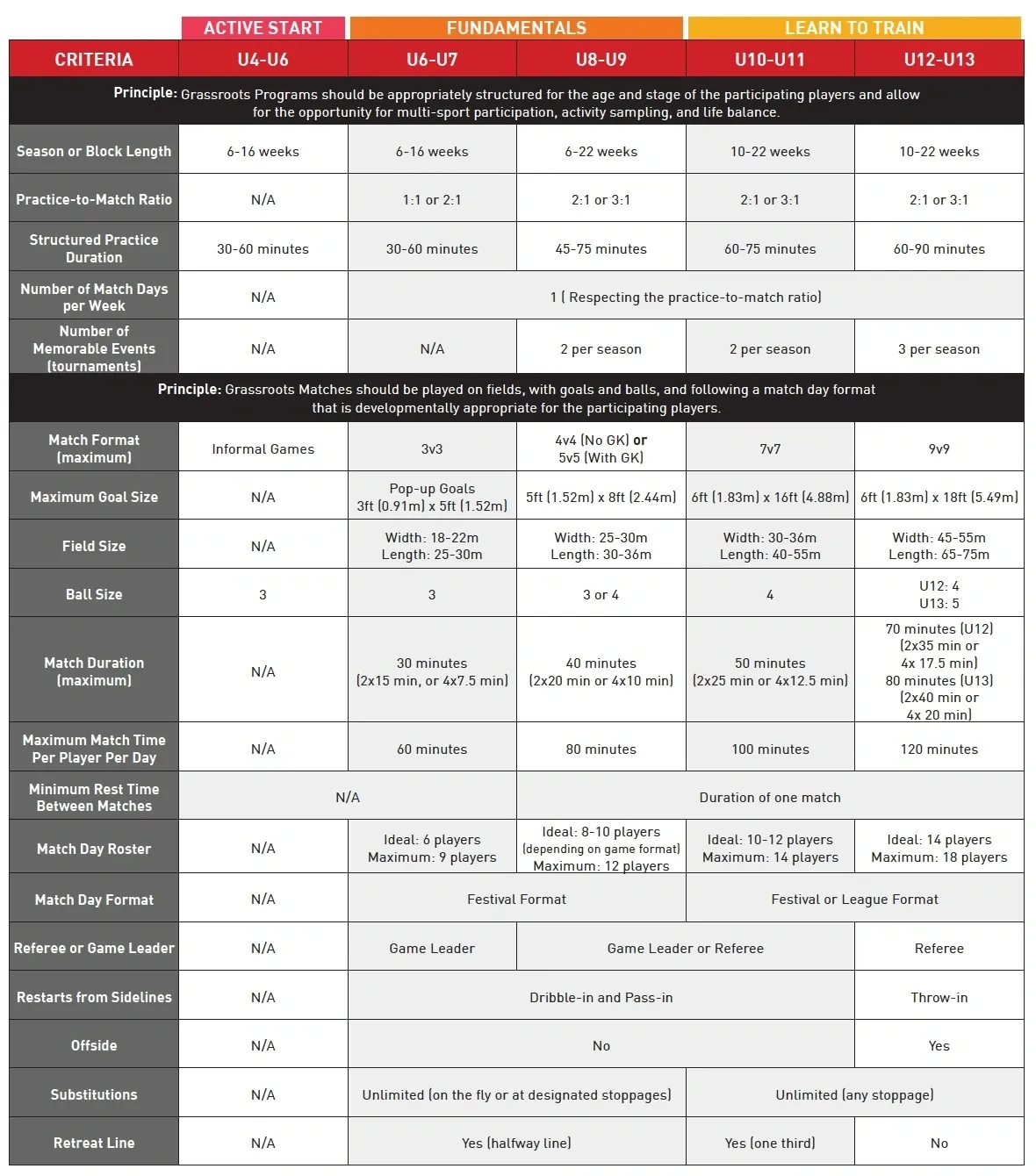
Grassroots Standards
GUIDING PRINCIPLES
Grassroots Matches should be played on fields, with goals and balls, and following a match day format that is developmentally appropriate for the participating players.
Coaches have the greatest impact on the experience of players and every child deserves a properly qualified coach.
Children register to play soccer, not to watch others play or spend time traveling. Teams should strive for fair playing time and limit travel time as much as possible.
Talent Identification and selection should be delayed as long as possible to provide as many players as possible with the best training environment available.
Match results should not be the focus of grassroots soccer as this restricts player development and negatively impacts the player experience.
Grassroots Programs should be appropriately structured for the age and stage of the participating players and allow for the opportunity for multi-sport participation, activity sampling, and life balance.
Player Pathway
The Canada Soccer Player Pathway is a national framework based on Long-Term Player Development (LTPD) principles, guiding individuals from grassroots, recreational play to high-performance levels with the goal of fostering lifelong participation in soccer. It focuses on fun, skill-building, and holistic player development, emphasizing age-appropriate training and competition to create confident, resilient athletes and well-rounded individuals. The pathway includes provincial and national academies and training environments, with the integration of the Canadian Premier League providing a domestic professional platform for emerging talent.
Key aspects of the Canada Soccer Player Pathway:
Long-Term Player Development (LTPD)
Lifelong Participation
Encourages players of all ages, genders, and abilities to engage with soccer for life.
Holistic Development
Grassroots to Elite Levels
Focus on Fun
Talent Identification
Community & Support
Integration of Professional Play
The Canadian Premier League offers a professional environment for young talents to compete and develop within Canada's domestic structure.
How it works
The Player Pathway serves as a roadmap, providing a structured approach to player development that aligns with different stages of a player's physical and mental growth. It encourages a player-centered approach, ensuring that the training, competition, and coaching are tailored to the individual's needs at each specific stage of their development.